If you’re searching for contacts SeattleSportsOnline email, you’re likely looking for the best way to reach the website for a question, feedback, technical support, or a business inquiry. Email is still one of the most trusted communication methods because it allows you to explain your request clearly and keeps a written record of the conversation.
However, simply finding an email address isn’t enough. The way you write your message can greatly affect how quickly you receive a reply. In this guide, you’ll learn why people contact SeattleSportsOnline, how to write an effective email, common mistakes to avoid, online safety tips, and practical advice that helps your message get noticed.
Whether you’re a reader, advertiser, journalist, or sports enthusiast, this guide will help you communicate professionally and efficiently.
Why People Search for Contacts SeattleSportsOnline Email
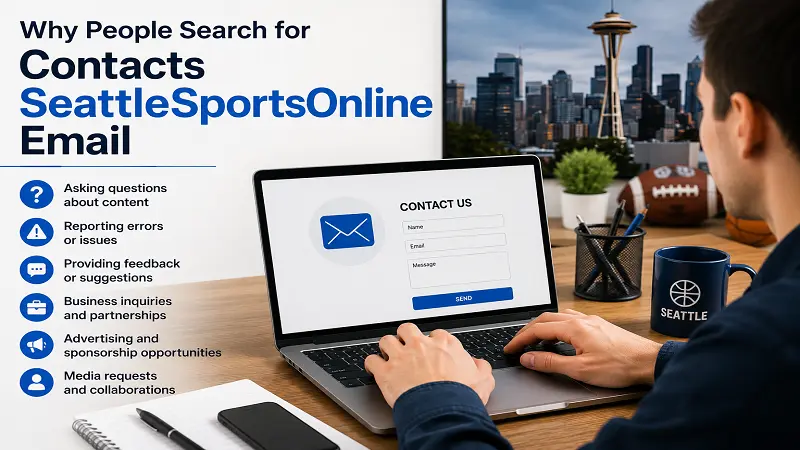
People contact sports websites for many different reasons. Instead of posting comments publicly, email allows users to discuss matters privately and in greater detail.
Some of the most common reasons include:
- Asking questions about published content
- Reporting incorrect information
- Requesting article updates
- Reporting technical problems
- Sharing feedback
- Discussing advertising opportunities
- Exploring business partnerships
- Submitting media inquiries
- Suggesting new content ideas
- Requesting copyright clarification
Knowing your purpose before writing helps you create a clear and focused message.
Why Email Is the Best Communication Method
Although websites may offer contact forms or social media accounts, email remains the preferred choice for professional communication.
It Creates a Permanent Record
Every email is stored, making it easy to review previous conversations if needed.
You Can Explain Your Request Clearly
Unlike short social media messages, emails allow you to provide detailed information.
Attachments Are Easy to Include
You can attach:
- Screenshots
- Documents
- Images
- PDFs
These files often help explain problems more effectively.
Professional Communication
Businesses, publishers, and media organizations continue to rely on email because it provides a formal communication channel.
Situations Where You Should Use Email
Different situations require different types of communication. Email is particularly useful for matters that require explanation or documentation.
General Questions
If you’re unsure about website content or policies, email is usually the best option.
Examples include:
- Questions about articles
- Website navigation
- Missing pages
- Reader inquiries
Reporting Errors
No website is completely free of mistakes.
If you notice:
- Incorrect statistics
- Wrong dates
- Misspelled names
- Broken links
- Missing images
send a polite email describing the issue.
The more specific your explanation, the easier it becomes to resolve the problem.
Technical Support
Technical issues can affect the browsing experience.
Examples include:
- Pages not loading
- Display problems
- Login issues
- Slow performance
- Contact form errors
Include information about your browser, device, and the page where the issue occurred whenever possible.
Business and Partnership Requests
Companies often use email to discuss:
- Advertising
- Sponsorships
- Brand collaborations
- Partnership opportunities
Professional emails make a stronger first impression.
Editorial Feedback
Constructive feedback helps improve future content.
Readers often email to:
- Suggest corrections
- Recommend story ideas
- Share opinions
- Ask for updated information
How to Write an Effective Email
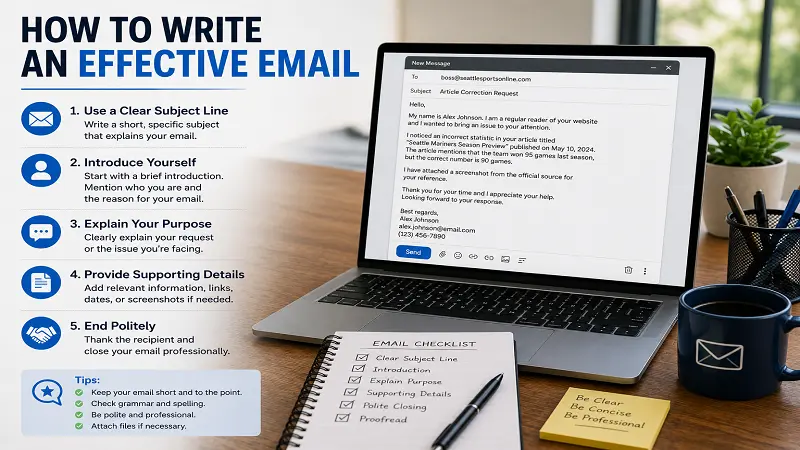
A clear email is easier to understand and usually receives a quicker response.
Write a Clear Subject Line
The subject should immediately explain your reason for writing.
Good examples include:
- Article Correction Request
- Technical Issue
- Advertising Inquiry
- Partnership Proposal
- General Question
Avoid vague subjects like:
- Help
- Hi
- Question
Specific subjects help organize incoming messages.
Introduce Yourself
Start with a short introduction.
Include:
- Your name
- Your reason for contacting
- Your organization (if relevant)
There’s no need for a lengthy introduction.
Explain Your Purpose Early
State your request within the first few sentences.
Instead of writing a long story, explain:
- What happened
- Where it happened
- Why you’re contacting the team
- What solution you’re seeking
Being direct saves time for both sides.
Add Supporting Information
Helpful details may include:
- Article title
- Date
- Screenshots
- URLs
- Device information
- Browser details
Providing complete information reduces unnecessary follow-up questions.
End Politely
Finish your email with appreciation.
Simple closings include:
- Thank you for your time.
- I appreciate your assistance.
- I look forward to your response.
Professional endings leave a positive impression.
Tips to Increase Your Chances of Getting a Reply
A few simple habits can make a big difference.
Keep It Short
Avoid writing long paragraphs.
Use short sentences and organize your thoughts clearly.
Stay Focused
Ask one main question per email whenever possible.
Multiple unrelated questions may delay responses.
Proofread Before Sending
Check for:
- Spelling mistakes
- Grammar errors
- Missing attachments
- Incorrect information
A polished email appears more professional.
Be Patient
Most organizations receive many emails every day.
Allow several business days before sending a polite follow-up.
Common Email Mistakes to Avoid
Many users accidentally reduce their chances of receiving a response.
Avoid these common mistakes:
- Writing unclear subject lines
- Sending duplicate emails
- Forgetting attachments
- Using rude language
- Writing extremely long messages
- Leaving out important details
- Sending blank emails
- Asking several unrelated questions at once
Small improvements can significantly improve communication.
Email Safety Best Practices
Whenever you communicate online, protecting your personal information is important.
Follow these simple safety tips:
- Never send passwords.
- Avoid sharing sensitive financial details.
- Verify the recipient before sending confidential files.
- Be cautious of suspicious replies.
- Watch for phishing attempts.
- Only include information necessary for your request.
Practicing good email security protects both your privacy and your data.
What Happens After You Send an Email?
Understanding the process helps set realistic expectations.
Typically, the workflow looks like this:
- Your email is received.
- It is reviewed by the appropriate team.
- Additional information may be requested.
- A response is prepared.
- Your inquiry is resolved whenever possible.
Simple questions are often answered more quickly than complex requests requiring investigation.
When Should You Send a Follow-Up?
Sometimes replies take longer than expected.
Consider sending a follow-up if:
- Several business days have passed.
- Your issue remains unresolved.
- You have additional information to provide.
A good follow-up should:
- Remain polite
- Reference your previous message
- Be brief
- Avoid sounding demanding
Patience and professionalism usually produce better results.
Best Practices Checklist Before Sending
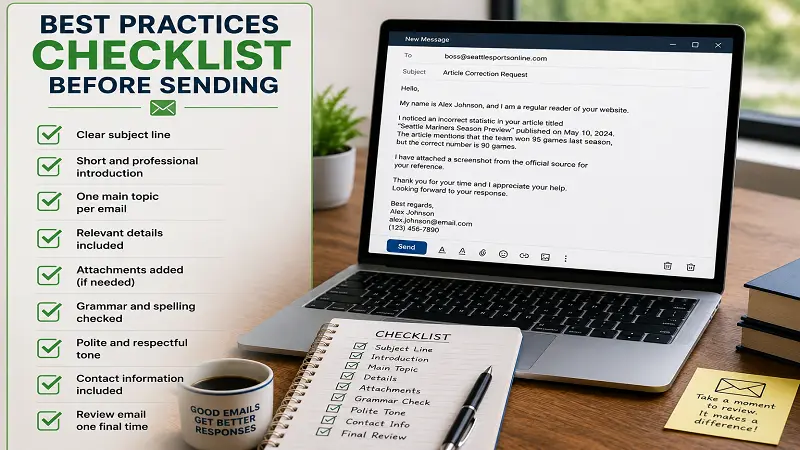
Before clicking Send, review this checklist:
- Clear subject line
- Short introduction
- One main topic
- Relevant details included
- Attachments added (if needed)
- Grammar checked
- Respectful language used
- Contact information included
A quick review helps avoid simple mistakes.
Why Professional Email Etiquette Matters
Good email etiquette benefits everyone involved.
It helps:
- Improve communication
- Reduce misunderstandings
- Speed up responses
- Build professional relationships
- Keep conversations organized
Even a simple email becomes more effective when written professionally.
Conclusion
Searching for contacts SeattleSportsOnline email is only the first step toward reaching the right team. The real key to successful communication is sending a clear, respectful, and well-organized message that explains exactly what you need.
Whether you’re reporting a website issue, asking a question, sharing feedback, or discussing a business opportunity, following professional email practices can greatly improve your chances of receiving a helpful response. Keep your message concise, include relevant details, proofread before sending, and be patient while waiting for a reply.
By applying the tips in this guide, you’ll communicate more effectively and make every email more productive.
Frequently Asked Questions
1. Why do people search for contacts SeattleSportsOnline email?
Most people search for it to ask questions, report issues, provide feedback, discuss partnerships, or request support.
2. What should I include in my email?
Include a clear subject line, a short introduction, your main request, and any helpful supporting information like screenshots or page titles.
3. How long should my email be?
Keep it brief and focused. Short, well-structured emails are easier to read and usually receive faster responses.
4. When should I send a follow-up email?
If you haven’t received a response after several business days, send one polite follow-up referencing your original message.
5. How can I improve my chances of getting a reply?
Use a clear subject line, explain your request early, include relevant details, proofread your email, and remain professional throughout your message. See more