
A beautiful home isn’t created by expensive renovations alone. Often, the biggest improvements come from thoughtful, practical upgrades that make everyday living easier and more enjoyable. DecorAdHouse upgrade tips by DecoratorAdvice focus on creating spaces that balance comfort, functionality, and timeless style without unnecessary spending. Whether you’re refreshing a single room or planning improvements throughout your home, smart upgrades can increase your home’s value while making it a more pleasant place to live.
Instead of following short-lived design trends, successful home improvement starts by solving everyday problems—improving storage, enhancing lighting, reducing clutter, and choosing durable materials. This guide covers practical strategies that help homeowners make lasting improvements with confidence.
Understanding the Search Intent
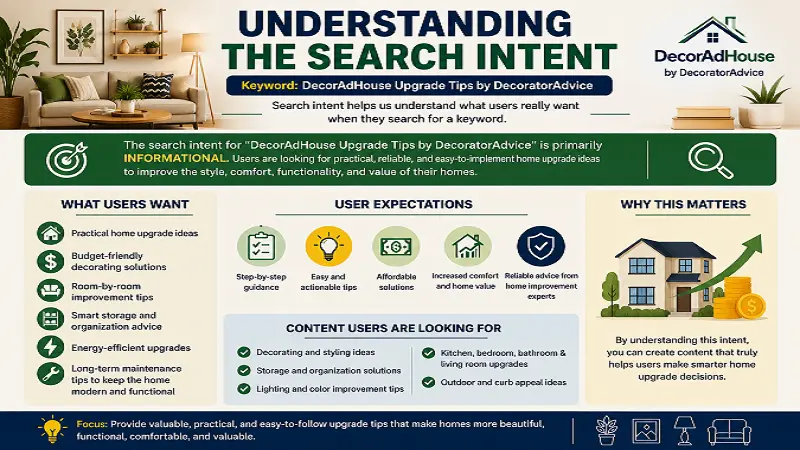
People searching for DecorAdHouse upgrade tips by DecoratorAdvice typically want:
- Practical home improvement ideas
- Affordable upgrades with noticeable results
- Better organization and functionality
- Modern yet timeless decorating advice
- Ways to increase comfort and property value
The goal isn’t simply decorating a home—it’s creating a space that works better for daily life.
Why Smart Home Upgrades Matter
Every improvement, no matter how small, contributes to a better living experience. Smart upgrades provide benefits beyond appearance.
Key Benefits
- Improved daily comfort
- Better space utilization
- Easier home maintenance
- Increased energy efficiency
- Higher resale value
- Reduced household clutter
- More relaxing living environment
Rather than making random changes, focus on upgrades that solve real problems.
DecorAdHouse Upgrade Tips by DecoratorAdvice: Where to Start
Before purchasing furniture or repainting walls, create a simple improvement plan.
1: Evaluate Your Home
Walk through each room and ask yourself:
- Which space feels outdated?
- Where does clutter collect?
- Is the lighting sufficient?
- What causes daily frustration?
- Which improvements fit your budget?
Identifying these issues first prevents unnecessary spending.
2: Set Priorities
Instead of renovating everything at once, rank projects based on their impact.
Priority |
Upgrade |
Benefit |
| High | Lighting | Improves comfort and appearance |
| High | Storage | Reduces clutter |
| Medium | Paint | Refreshes interiors |
| Medium | Hardware | Modernizes rooms |
| Low | Decorative accessories | Adds personality |
Working in phases makes projects more manageable.
Refresh Your Walls Without Major Renovations
Walls occupy the largest visual area in any room. Refreshing them instantly changes the atmosphere.
Best Paint Colors
- Warm white
- Soft gray
- Beige
- Sage green
- Pale blue
- Greige
Neutral colors remain stylish longer and complement most furniture.
Add Texture
Instead of painting every wall:
- Create one accent wall
- Use textured wallpaper
- Install decorative wall panels
- Add framed artwork
- Hang floating shelves
These additions create visual interest without overwhelming the room.
Upgrade Lighting for Comfort and Function
Lighting affects productivity, mood, and overall aesthetics more than many homeowners realize.
Layer Your Lighting
Combine multiple light sources:
- Ceiling fixtures
- Floor lamps
- Table lamps
- Wall sconces
- Under-cabinet lighting
- LED strip lighting
Layered lighting allows each room to serve different purposes throughout the day.
Maximize Natural Light
Simple improvements include:
- Choosing lighter curtains
- Cleaning windows regularly
- Using mirrors to reflect sunlight
- Avoiding oversized furniture near windows
Natural light makes rooms feel larger and more welcoming.
Organize Every Room with Smart Storage
Storage isn’t just about hiding belongings—it’s about creating a more functional home.
Living Room
- Storage ottomans
- Floating shelves
- TV cabinets with hidden compartments
Bedroom
- Under-bed storage
- Closet organizers
- Bedside tables with drawers
Kitchen
- Pull-out pantry shelves
- Drawer dividers
- Vertical cabinet organizers
Bathroom
- Wall-mounted shelves
- Over-the-toilet cabinets
- Decorative baskets
Well-planned storage makes cleaning easier and reduces visual clutter.
Upgrade the Kitchen Without a Full Remodel
The kitchen often provides one of the highest returns on investment, but major renovations aren’t always necessary.
Budget-Friendly Kitchen Improvements
- Replace cabinet handles
- Paint cabinet doors
- Install a modern backsplash
- Upgrade faucets
- Improve task lighting
- Add open shelving
- Organize pantry items in labeled containers
These simple changes can dramatically improve both function and appearance.
Create a Living Room That Feels Inviting
A comfortable living room should encourage conversation, relaxation, and flexibility.
Focus on Balance
Instead of filling every corner:
- Keep walking paths open
- Choose furniture proportional to the room
- Add layered textures using rugs and cushions
- Include indoor plants
- Use a consistent color palette
Avoid overdecorating. Empty space helps a room feel calm and spacious.
Design a Bedroom That Supports Better Sleep
Bedrooms should promote relaxation rather than overstimulation.
Easy Bedroom Upgrades
- Invest in quality bedding
- Install blackout curtains
- Use warm bedside lighting
- Reduce unnecessary decorations
- Keep surfaces uncluttered
- Add soft area rugs
A peaceful bedroom often improves sleep quality and overall well-being.
Improve Bathroom Style and Storage
Bathrooms may be small, but thoughtful improvements make a significant difference.
High-Impact Changes
- Replace outdated mirrors
- Upgrade faucets
- Install better lighting
- Add towel hooks
- Use matching accessories
- Introduce moisture-resistant plants
Keeping countertops organized instantly makes bathrooms appear cleaner.
Increase Energy Efficiency While Upgrading
Modern home improvements should reduce long-term costs as well as improve comfort.
Energy-Saving Improvements
- LED lighting
- Smart thermostats
- Energy-efficient appliances
- Weather stripping around doors
- Improved insulation
- Low-flow showerheads
- Programmable lighting controls
These upgrades help lower utility bills while reducing environmental impact.
Don’t Forget Outdoor Spaces
Your home’s exterior creates the first impression.
Simple Curb Appeal Ideas
- Paint the front door
- Install pathway lighting
- Add seasonal flowers
- Clean walkways
- Maintain landscaping
- Upgrade house numbers
- Create a welcoming entryway
Outdoor improvements also increase property value.
Personalize Without Creating Clutter
A beautiful home reflects the people who live in it.
Display meaningful items such as:
- Family photographs
- Travel souvenirs
- Handmade artwork
- Books
- Vintage finds
- Indoor plants
The key is intentional decorating rather than filling every surface.
Common Home Upgrade Mistakes to Avoid
Many homeowners waste time and money by making avoidable mistakes.
Avoid These Errors
- Buying oversized furniture
- Ignoring storage needs
- Following short-lived trends
- Using too many colors
- Choosing style over functionality
- Poor lighting placement
- Starting projects without a budget
Good design is about balance, not excess.
Seasonal Maintenance Keeps Your Home Looking New
One area often overlooked is regular maintenance after upgrades. Small seasonal checks protect your investment and prevent expensive repairs.
Every Season
- Inspect walls for cracks or moisture.
- Tighten loose cabinet handles.
- Clean air vents and filters.
- Test smoke detectors.
- Check outdoor drainage.
- Reseal countertops if needed.
- Touch up paint before damage spreads.
Routine maintenance helps your upgrades last much longer.
Budget-Friendly Home Upgrades with Big Impact
You don’t need thousands of dollars to improve your home.
Affordable Ideas
- Rearrange furniture
- Paint interior walls
- Replace old curtains
- Update throw pillows
- Install floating shelves
- Replace cabinet hardware
- Add mirrors
- Upgrade light fixtures
- Introduce indoor plants
Small improvements often provide the highest value because they’re affordable and immediately noticeable.
How to Choose Upgrades That Add Long-Term Value
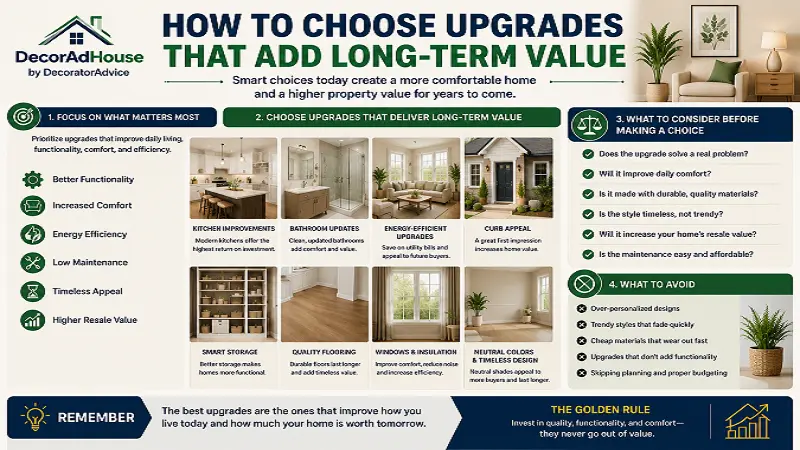
Before spending money, ask whether an upgrade will still be useful five years from now.
Prioritize improvements that:
- Improve daily comfort
- Increase storage
- Enhance energy efficiency
- Require minimal maintenance
- Match your home’s overall style
- Appeal to future buyers
Timeless upgrades almost always outperform trendy designs.
Conclusion
Following DecorAdHouse upgrade tips by DecoratorAdvice is about making intentional improvements that enhance everyday living rather than chasing expensive renovations or temporary trends. By focusing on practical upgrades such as better lighting, smarter storage, energy efficiency, functional layouts, and regular maintenance, you can create a home that feels comfortable, organized, and visually appealing for years to come.
Remember that the best home improvements solve real problems while reflecting your personal lifestyle. Even small, affordable changes can dramatically improve your home’s comfort, functionality, and long-term value when planned thoughtfully. See more
Frequently Asked Questions
1. What are DecorAdHouse upgrade tips by DecoratorAdvice?
They are practical home improvement strategies focused on improving comfort, organization, style, and functionality through smart, affordable upgrades.
2. Which home upgrade offers the best return on investment?
Kitchen improvements, bathroom updates, energy-efficient upgrades, and enhanced curb appeal generally provide the highest long-term value.
3. How can I improve my home on a limited budget?
Start with painting walls, upgrading lighting, replacing cabinet hardware, improving storage, adding mirrors, and rearranging furniture for better flow.
4. How often should I update my home?
Perform seasonal maintenance every few months and refresh décor or fixtures every few years based on wear, functionality, and changing lifestyle needs.
5. What is the biggest mistake homeowners make during upgrades?
Many focus only on appearance while overlooking functionality. Prioritizing storage, lighting, layout, and energy efficiency creates a home that is both beautiful and practical.